

Unlock Creativity with Engaging Building Blocks Toys

Building Blocks Toys: Nurturing Creativity & Learning
Introduction
Play strengthens the growth of children and is an essential activity. Many different kinds of playtime activities are available to children today; however, building blocks have stood the test of time regarding toys. Building blocks are more than just colorful bricks; they encourage the development of fine motor skills, enhance logical reasoning, and facilitate STEM learning.
With the simplicity of having hands-on, tactile engagement with play as the only distraction available in the modern world, building blocks offer entertainment and enhance imagination and teamwork. Let’s discover how these toys are fundamental for achieving milestones in education and development.
What Are Building Blocks Toys?
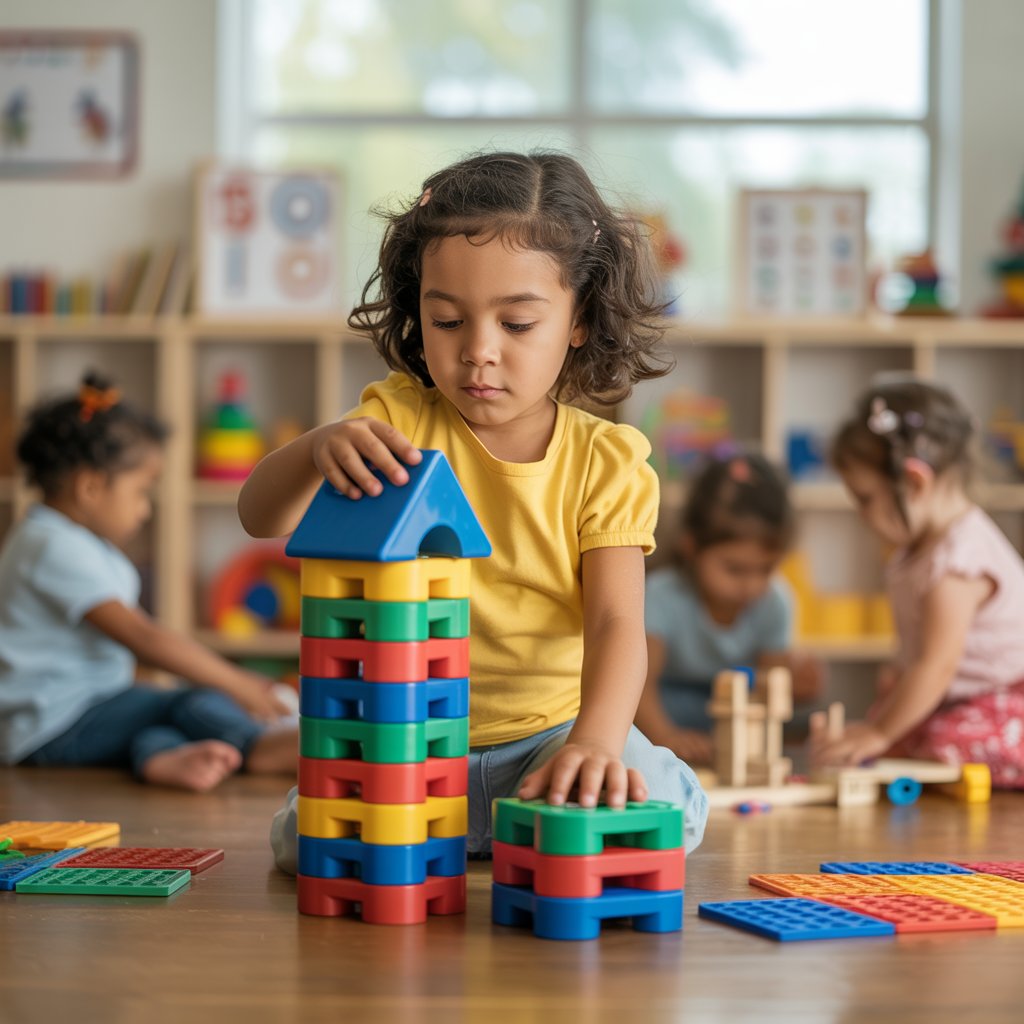
Building blocks toys games are available in various forms: foam shapes, wooden cubes, magnetic tiles, and plastic brick sets. Simple in nature, these tools allow children as young as toddlers who can stack shapes to older children who can design entire cities to let loose their imaginations.
Cognitive Benefits of Building Blocks
Developing Problem-Solving Skills
Stacking and interlocking blocks enable children to solve and understand spatial problems and relationships between actions on a larger scale. Each block allows the child to understand what stays standing, what topples down, and what fits.
Enhancing Memory and Focus
Paying attention improves with the ability to recreate specific patterns and complex structures. All these factors enhance short-term memory and serve as practical skills for children to help in their day-to-day activities and at school.
Educational Construction Toys and STEM
Educational construction toys combine science, technology, engineering, and mathematics (STEM) elements in playful and captivating ways. As children construct bridges or buildings, they begin to grasp concepts of balance, shape, and geometry without formal instruction.
Early education associations have emphasized integrating STEM education through hands-on experiences.
Social and Emotional Growth
Cooperative Play
Working together helps develop communication and teamwork skills. During the co-creation process, ideas are exchanged, and differences are settled.
Confidence Building
Children gain confidence from achieving goals over time. Constructing a complex structure instills a sense of achievement.
Motor Skill Development
Manipulating small pieces involves precise hand movements and eye coordination and enhances motor skills. These form the foundation of writing, drawing, and even putting on shoes.
Types of Building Blocks Toys
Wooden Building Blocks
These wooden blocks are perfect for toddlers interested in balancing and stacking toys and learning coordination while enjoying natural aesthetics.
Interlocking Plastic Blocks
Older children favor these as they allow for numerous configurations and constructions. LEGO has pioneered this category.
Magnetic Construction Sets
This modern evolution allows for easier and more imaginative construction using magnets.
Safe Play and Age Appropriateness
Always choose building blocks that are appropriate for the age of your child. Soft blocks are better suited for toddlers, while older children can handle intricate and smaller sets. Your buying choices should be influenced by recognized safety standards.
The Role of Building Blocks in Montessori and Waldorf Education
Both Montessori and Waldorf philosophies of education encourage unrestricted and creative play. Building blocks are crucial in these educational frameworks where children direct their learning through touch and exploration.
How to Choose the Right Building Blocks
- Age Appropriateness
- Material Safety
- Skill Level
- Educational Value
Select toys that align with your child’s developmental stage and interests.
Building Blocks in the Digital Era
With screens encroaching on every facet of a child’s life, tactile building block toys are again emerging because of their imaginative and sensory appeal. Many educators and therapists now recommend them for cognitive rebalancing and a digital detox.
Where to Find Quality Building Blocks
For a diverse and age-appropriate range of educational construction toys, refer to trusted online sources.
- ToyMarche - Building Blocks
- Melissa & Doug
- LEGO Education
- Scholastic Parent Resources
FAQ
Q1: What age is best for building blocks toys?
Building blocks come in various age ranges, beginning with larger, safer blocks at 12 months to interlocking sets for older kids.
Q2: Do building blocks toys improve intelligence?
They enhance early brain development by improving logic, spatial awareness, and problem-solving skills.
Q3: Are building blocks suitable for both boys and girls?
Yes. Building blocks foster creativity and engineering learning without gender constraints.
Q4: What should I look for in educational construction toys?
Look for age-appropriate pieces, non-toxic materials, STEM value, and versatile designs.
Q5: Can building blocks help children with special needs?
Yes. Many therapists use blocks in sensory and motor skill therapy, especially for children with autism or developmental delays.
Final Thoughts
Building blocks toys are not only a means of entertainment. They help set children up for academic, emotional, and creative success. In this rapidly evolving digital world, these imaginative toys are more valuable than ever.


